Visualizzazione post con etichetta work. Mostra tutti i post

La mappa geopolitica degli incentivi alle traduzioni 2016

Gli incentivi alle traduzioni sono uno degli strumenti principali per favorire la diffusione dell’editoria italiana al di là dei confini nazionali, grazie alla copertura (in tutto o in parte) di uno dei maggiori costi editoriali per gli editori stranieri che vogliono pubblicare un’opera di un autore italiano. 
I dati diffusi dal Ministero degli Affari esteri per il 2016 consentono di aggiornare la mappa geo-editoriale dei Paesi da cui provengono le richieste e verso i quali sono stati destinati i contributi a favore delle traduzioni.

Elaborazione Ufficio studi Aie su dati del Ministero degli Affari Esteri
(in % di titoli; incremento percentuale sull'anno precedente) 

Il primo dato che emerge è la riduzione del 10,4% dell’ammontare complessivo della somma erogata, passata dai circa 196 mila euro del 2014 ai 175.500 euro del 2016. Un calo dello stesso ordine di grandezza di quello già registrato nel 2014: -11,0% rispetto al 2013, anno in cui l’incentivo complessivo era di 220 mila euro. Nel 2016 è cresciuto ulteriormente il numero di Paesi da cui provengono le richieste (42 Paesi contro i 38 del 2014 e i 30 del 2013), mentre è diminuito di circa il 12% il numero di titoli per cui vengono chiesti gli incentivi (136 titoli nel 2016 contro i 154 del 2014). Da una parte quindi assistiamo a un crescente interesse dall'estero verso i nostri autori e i nostri titoli, dall’altra continuano a ridursi gli incentivi complessivi erogati. Molto probabilmente con maggiori contributi alle traduzioni si potrebbero avere risultati migliori e una maggiore penetrazione e diffusione dei titoli italiani all’estero.Nell’attribuzione di questi incentivi anche nel 2016 si è continuato a privilegiare autori e titoli contemporanei rispetto a quelli fuori diritti. Se nel 2013 infatti i titoli fuori diritti rappresentavano il 17,8% del totale nel 2014 il loro numero è diminuito drasticamente arrivando a incidere per il 5,2% sul totale. Nel 2016 la percentuale è solo leggermente aumentata, arrivando all’8,1% del totale dei titoli.

Fonte: Ufficio studi Aie su dati del Ministero degli Affari Esteri

Le aree in cui le richieste di contributi sono più alte continuano a essere quelle europee, sia per quanto riguarda i Paesi dell’Europa occidentale (con il 33,1% dei titoli complessivi, in aumento del 3,2% rispetto al 2014 e il 33,4% dei contributi), sia per quelli che abbiamo definito «Nuovi Paesi europei» (che comprendono i Paesi balcanici dalla Romania alla Croazia, dalla Macedonia alla Bosnia-Erzegovina, all’Ungheria, ma anche Polonia e Lituania). Sono proprio questi Paesi che anche nel 2016 hanno fatto richiesta per il maggior numero di titoli (35,3% del totale), in calo però rispetto al 41,6% del 2014. Seguono, a notevole distanza rispetto ai primi due, i Paesi dell’Asia e dell’Area del Pacifico, dove aumentano sia il numero di titoli (13,2% rispetto all’8,4% del 2014) sia i contributi (15,7%, contro il 12,6% del 2014). Cali in entrambe le voci invece sono registrati per l’area mediterranea (in cui sono inclusi Paesi che presentano oggi situazioni sociali e politiche molto complesse, come la Turchia e l’Egitto). Se nel 2014 era stata fatta richiesta per il 9,7% dei titoli complessivi, nel 2016 questa percentuale è scesa al 4,4%. Per quanto riguarda i contributi erogati, si è passati dal 10,3% sul totale del 2014 al 6,3% del 2016. In aumento rispetto al 2014, seppure con numeri ancora piuttosto piccoli rispetto al totale, il peso del Nord America (5,1% dei titoli nel 2016), dell’America Latina (3,7% dei titoli) e dell’area russa (che comprende anche Ucraina e Bielorussia) con il 5,1% dei titoli totali.Nell’insieme le richieste di traduzioni provenienti da Paesi di lingua inglese (Uk+Usa), traduzioni che permetterebbero un accesso più diretto ad altri mercati internazionali, rappresentano circa l’8,8% delle richieste di titoli da tradurre con numeri assoluti ancora piccoli anche se in crescita: dagli 8 titoli del 2014 ai 12 del 2016. 
Come già evidenziato per gli anni 2013 e 2014, anche l’anno scorso le richieste di contributi provenienti da editori stranieri si sono orientate soprattutto verso opere pubblicate da grandi e medio grandi editori italiani. Si può osservare però un aumento del numero di titoli di piccoli editori italiani interessati dal contributo: se nel 2014 rappresentavano il 12-13% del numero totale, nel 2016 sono diventati circa il 19%.
Da un’analisi dei titoli interessati dagli incentivi emerge la grande attenzione internazionale verso il fenomeno Elena Ferrante. Circa il 10% dei titoli è rappresentato infatti da opere dell’autrice de L’amica geniale e le richieste di traduzione vengono soprattutto dai Paesi europei (dalla Finlandia al Portogallo, dall’Islanda alla Germania) ma anche dalla Corea del Sud.

________________________________
http://www.giornaledellalibreria.it/news-internazionalizzazione-la-mappa-geopolitica-degli-incentivi-alle-traduzioni-2016-2825.html



Thousands of court cases adjourned due to failures in interpreting services

Ministry of Justice figures show that more than 2,600 court cases have been affected over five years, as Capita withdraws from bidding for contract.

More than 2,600 court cases have been adjourned over the past five years because of failures in the interpreting service, according to figures released by the Ministry of Justice.
The extent of the problem was confirmed as doubts emerged about the viability of the troubled contract for interpreting services after the outsourcing firm Capitadeclined to bid for its renewal in October.
A war crimes trial at the Old Bailey collapsed last year and has had to be rescheduled because of problems over the quality of interpreting offered to the defendant, a Nepalese army officer.
The figures for the number of cases rescheduled since 2011, when the new contract paying lower rates came into effect, have been provided by the justice minister Lord Faulks.
In the magistrates courts, 2,524 trials have had to be adjourned because of the lack of an interpreter over the past five years. In the crown court, where costs are far greater, 137 trials have had to be adjourned because of interpreter difficulties. The cumulative expense of the adjournments was not recorded. 
Commenting on the failures, the Liberal Democrats’ justice spokesman, Lord Marks QC, said: “It goes without saying that every time an interpreter fails to turn up, either injustice is done, because the case goes on without one, or the case has to be adjourned, leading to delays and a waste of everyone’s time and costs.
“Even with improvement against targets, the number of court cases adjourned owing to the lack of interpreters has remained stubbornly high. As one judge put it, the only just target is 100% attendance. With the next contract the government must ensure effective and efficient attendance of high-quality interpreters at court to enable justice to be delivered.” 
Capita, which has held the contract to provide interpreters in England and Wales for the past four years, has been heavily criticised in the past. 
Last year it was ordered to pay £16,000 by the most senior judge in the family courts for its “lamentable” failure to provide interpreters seven times in the course of a single adoption case. In 2013, the justice select committee described the manner in which the court interpreting service was privatised as shambolic.
Asked why it had decided not to bid for the main contract after being shortlisted, a Capita spokesperson said: “We took the decision to bid solely for Lot 2 [the more predictable ‘written translation and transcription’ service]. It would be inappropriate to comment further at this stage.” 
Geoffrey Buckingham, an executive member of the European Legal Interpreters and Translators Association, said: “The available pool of interpreters is already limited, and the word is that many now have enough experience to move on to better-paid work. If borne out, then quality will continue to fall.
“The MoJ has not learned any lessons. The team names have changed, but the process is so flawed that one of those shortlisted in December has walked away. Capita Translation and Interpreting recently wrote to their interpreters saying they had taken the ‘strategic decision’ to withdraw from the procurement [process].”
Following Capita’s withdrawal, the two remaining bidders for the main contract are the Leeds-based translation company thebigword and the US firm TransPerfect. Earlier this week, thebigword won a £15m contract to provide telephone and face-to-face interpreting and translation services to UK central government organisations.
A Ministry of Justice spokesperson said: “We are absolutely committed to improving performance and ensuring the highest standard of language services for those who need them.
“Our latest figures show a 98% success rate in 2015 – the highest since the interpreting contract began – with complaints about the service at a record low, down 30% on last year. Since this contract was introduced, we have also spent £38m less on language service fees.”
Interpreters are self-employed and under no obligation to accept job requests. A boycott by interpreters three years ago, in protest at low pay rates, failed to persuade the government to abandon the contract. 
_____________________
http://www.theguardian.com/law/2016/may/04/thousands-of-court-cases-adjourned-due-to-failures-in-interpreting-services

Fast-talking MEPs urged to slow down for interpreters

The European Parliament's chief of staff has urged MEPs to speak slower and stick to their native language, to help the interpreters.
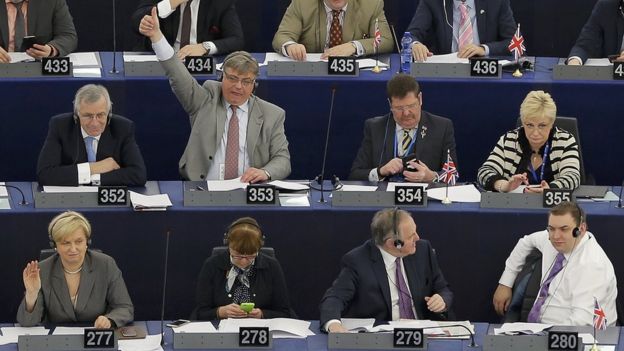
MEPs in Strasbourg, 2 Feb 16
Secretary General Klaus Welle said: "It's extremely important that people do not speak too fast." Interpreters had made that request, he added.

Thousands of interpreters and translators work in EU institutions, to cope with 24 official languages.
The parliament has about 330 staff interpreters and 1,800 freelancers.
In addition, the parliament employs about 700 translators, who translate more than 100,000 pages each month.
The most recent languages to be made official were Croatian (in 2013), Irish, Bulgarian and Romanian (all in 2007).

Image copyrigInterpreters translate orally, in real time. But Mr Welle said some were overburdened and others under-employed.

"The average amount of time in the interpreter's booth is 10 hours... But we need more fairness between interpreters - the individual tally varies between six and 16 hours in the booth," Mr Welle said.
The scope of translation work in the EU was unique, he said. "Even at the UN you only have interpretation in six languages."
"It's also extremely important for interpreters that people speak their own language," he told the parliament's budgetary control committee.
"If they speak a foreign language the quality of interpretation goes down. You hear interpreters making requests to you: 'Please speak more slowly, speak your own language.'"
The parliament's budget for interpreters is €45m and another €9m for translations done externally.
The European Commission - where EU laws are drafted - has 600 staff interpreters and 3,000 freelance interpreters. The Commission's total staff is about 33,000.
________________________
http://www.bbc.com/news/world-europe-35501198

The Magic Number is EUR 0.15: Translator Rate Survey Released in Germany

Germany’s Federal Association of Interpreters and Translators [Bundesverband der Dolmetscher und Übersetzer e.V. (BDÜ)] published the fifth edition of its rate survey in January 2016. The survey is based on pricing information collected from almost 1,100 translators and interpreters and covers 35 language pairs.
According to André Lindemann, association president, the survey is meant to provide guidance to new translators and inexperienced buyers in this “fragmented and often opaque market,” but should also be of value to many other market participants. The authors of the study stress, however, that the survey in no way represents any kind of official pricing guideline by the Association as this would be against Germany’s anti-trust laws.
Germany’s market for translation and interpretation services is still extremely fragmented, per the survey. Pricing pressure continues unabated and, according to feedback the association received from translators and interpreters, has actually increased in recent years. The survey was conducted in August and September 2015 and asked for 2014 pricing data from participants.
Slator has reviewed the 60-plus-page German-language survey and highlights some of the key points. The survey presents detailed pricing tables segmented according to a number of variables, such as client group, pricing metric (lowest, highest, most frequently mentioned), and pricing standard (per word, line, hour, day, etc.). In terms of client groups, the survey asked for the rates charged to direct clients in government departments, colleagues, private clients, and direct clients in the private sector.
The rates listed below are based on those given for the category “direct clients in the private sector,” which typically received the most number of responses. For a number of language combinations the survey only collected data on “per line” pricing, which is still very common in Germany and Switzerland.
However, Slator decided to focus only on the combinations where a price-per-word was available.
As a result, the summary below does not represent the full set of data collected by the BDÜ but still provides a useful snapshot of market conditions for German-based freelance linguists.
The following rates are based on what the survey calls the “median price,” (i.e., the figure in the middle of a range of rates arranged from lowest to highest), which cancels out extremes at both ends. All prices are in EUR.
German -English0.16                  English – German0.15
German – French0.16French – German0.15
German – Greek0.18Italian – German0.15
German – Italian0.15Dutch – German0.15
English – French0.15Spanish – German0.14

In addition, the survey also asked how Translation Memory matches are discounted. Again, Slator is using the median values.
Repetitions70% discount
100% matches70% discount
95-99% matches50% discount
85-94% matches40% discount
75-84% matches20% discount
50-74% matchesNo discount
No MatchNo discount

Furthermore, the survey included a list of hourly rates (in EUR) charged for proofreading services.
German50
English50
French45
Italian45
Russian50
Spanish50

Finally, the survey asked for interpretation rates. The rates below are full-day rates in EUR.
ConsecutiveSimultaneous (Conference)
German ↔ English710750
German ↔ French625727.50
German ↔ Italian600750
German ↔ Japanese700N/A
German ↔ Polish600725
German ↔ Russian640725
German ↔ Spanish625750

Overall, the pricing for both translation and interpretation services shows a remarkable consistency across language combinations. For translation services the magic number seems to be around EUR 0.15—still a fairly solid price point considering that many global agencies now offer end-clients a lower price while still promising all the QA bells and whistles.
Despite the buzz around machine translation post-editing, the survey did not collect data on post-editing services, which will doubtless be increasingly common going forward.
__________________
http://slator.com/industry-news/the-magic-number-is-eur-0-15-translator-rate-survey-released-in-germany/

Home Office interpreters threaten boycott over pay cut

The system for processing immigration claims across the country is set to grind to a halt in the new year if a threatened mass boycott by Home Office interpreters goes ahead.
The looming action in protest at pay cuts is the first time the estimated 2,000 interpreters have threatened to stop work. The organisers of a fair pay campaign – who are running it anonymously for fear of reprisals by the Home Office – say that so far they have received solid support from several hundred interpreters. A meeting with Home Office bosses has been scheduled for 11am on Monday to discuss their concerns.
The problems began when interpreters received an email on 20 November from the Home Office central interpreters unit in Liverpool informing them that a pay cut would be introduced from 1 January. Interpreters receive £16 an hour on weekdays and slightly more at the weekend. But the first hour’s work is paid at an enhanced rate to recognise the time and cost of travelling to appointments. That first-hour rate is being cut from £48 to £32 on weekdays and from £72 to £46 at weekends.
Interpreters are expected to travel up to three hours each way without extra payments from the Home Office. They attend meetings between asylum seekers and others interacting with immigration officials, and translate interview questions and answers face to face. The pay cuts will apply to various areas of the Home Office’s work, including UK Visas and Immigration, Border Force, Immigration Enforcement and HM Passport Office.
The interpreters say they have not had a pay rise since at least 2002, so in real terms have already taken a sizeable cut. But this is the first time the Home Office has proposed lowering their wages.
Home Office interpreters are highly trained and have to go through counter-terrorism security clearance, meaning it will not be easy to substitute other interpreters at short notice if the boycott takes effect. The plan is to start the boycott on 1 January and to follow it with a series of walkouts after that.
“There is no strike planned because, as freelancers, we cannot legally do so. We may, however, choose not to accept assignments and that is what the boycott will consist of,” said one of the interpreters organising the action.
“At the moment, the Home Office needs interpreters more than we need them. They do not have any other system currently in place to substitute our services other than for telephone interpreting, which they can outsource to thebigword [an online firm]. They know that if we boycott even for a day, that will cause major disruptions to their business.”
The interpreters have written to the Home Office to express their dismay at the pay cut. “This decision came out of the blue; there had been no consultation nor any forewarning of a reduction in our fees,” the letter says. “The fees paid to us have remained unchanged since at least 2002, when the current rates came into effect, whilst being eroded by 3.5% annually due to inflation.
“In view of this, any further reductions are totally unacceptable. Instead … the Home Office should do the right thing and seriously consider increasing the rates of payment to account for the effects of inflation, just as the Home Office has done with their staff’s salaries for the last 12 years, other than three of them.”
The organisers of the campaign have complained that they were not consulted over the changes, but Home Office officials say consultation was not required before the changes were made, in line with the terms of the interpreters’ contract.
Some interpreters have expressed concern about being blacklisted by the Home Office if they raise concerns about pay cuts. But the organisers of the protest say they have received assurances from the central interpreting unit in Liverpool that raising concerns about pay will have no bearing on the number of bookings interpreters receive from the department.
Another interpreter, who also did not want to be named, said: “The Home Office cannot function without us. They will not be able to process any immigration claims if we go ahead with our boycott.”
She said the interpreters were very loyal to the Home Office but often were not treated well. In some centres they are not allowed to use the same toilets as Home Office staff, she said.
“Sometimes we are looked down on. This pay reduction is a huge insult and the time has come to protest,” she added.
A Home Office spokesperson said: “We keep our costs under constant review to ensure the contractors we use offer the best value for money for the taxpayer. As part of this, we have considered the rates at which interpreters are paid and have made some changes, which are effective from 1 January.
“This information was shared with contractors several weeks ago. We are aware some interpreters have raised concerns about this and we have met with them to discuss why the changes are necessary.”
__________________________
http://www.theguardian.com/uk-news/2015/dec/20/home-office-interpreters-threaten-boycott-over-pay-cut

Translation support and funding


Funding

Publishing Scotland Translation Fund

Designed to encourage international publishers to translate works by Scottish writers, a new Translation Fund was launched on 25 August at the Edinburgh International Book Festival. The fund is administered by Publishing Scotland on behalf of Creative Scotland. Its purpose is to support publishers based outside the UK to buy rights from Scottish and  UK publishers and agents by offering assistance with the cost of translation of Scottish writers. The funding will be received in the form of a grant.

Priority will be given to the translation of contemporary literature, including fiction, non-fiction, poetry, writing for children and graphic novels. Assessment criteria will also include the merit of the work to be translated, financial need of the publisher, track record of publisher and translator, and the proposed marketing plan. An expert panel will meet twice a year to assess applications.

For more details, see the Press Release of 25 August 2015. Before applying, please read the terms and conditions. To apply, complete the application form and send it to Lucy Feather by 27 November 2015.


European Union

The EU's new Creative Europe programme offers funding opportunities for the translation of European fiction. The maximum grant available is €100,000, for the translation of 3 to 10 books. There is also (in 2014 and 2016) the opportunity to apply for 'framework' agreements for the translation of 5-10 books a year for 3-4 years, which is up to €100,000 a year. The applicants must bepublishing houses or publishing groups looking to translate works of fiction from/into specified member state languages. Welsh and Scottish Gaelic are also eligible.The next deadline is 3 February 2016. This fund has an annual deadline. Details appear on the CreativeEuropeUK website.

Translation into English, Scots or Gaelic

List of language-based organisations that provide information, support and/or funding for publishers interested in translating and publishing books from that language into another language.

Canadian support for translation other than French or English: Canada Council for the Arts
Estonian: TRADUCTA funded by The Cultural Endowment of Estonia
Italian: Cultural Division of the Italian Ministry of Foreign Affairs
The Cultural Division of the Italian Ministry of Foreign Affairs is offering funding - either a "prize" or a "contribution" - to publishers for the translation into English of an Italian literary or scientific work:
  • prize if the book has already been translated, published and on sale in the foreign market
  • contribution as an incentive to the future translation of an Italian work which will be published.
There are two deadlines a year: 30 April and 31 October. Apply using the application form (download Word version). The Istituto Italiano di Cultura in Edinburgh is happy to supply more information. E: iicedimburgo@esteri.it or phone 0131 668 2232.
Japanese: Japan Foundation
Lithuanian: Books from Lithuania
The Lithuanian Culture Institute promotes Lithuanian literature and Lithuania's authors in the world. It runs the Translation promotion program www.booksfromlithuania.lt/en/translation-promotion-program and organises publishers' visits to Lithuania, especially during the Vilnius Book Fair, the biggest in the Baltics (held each February). The LCI has recently launched its new website - lithuanianculture.lt (more info in English coming soon). Lithuania will be the market focus (along with Estonia and Latvia) at the 2018 London Book Fair.
Norwegian: Norwegian Literature Abroad (NORLA)
Polish: The Poland Translation Programme (The Polish Book Institute)
Portugese: Directorate of Books and Libraries (DGLB, Portugal)
Slovenian: Trubar Foundation
Swiss books: Pro Helvetia
Turkish: TEDA Project

Other useful sources of information

British Centre for Literary Translation website: This website lists opportunities including funding and competitions.
PEN Translates Award: This award will fund up to 75% of translation costs for selected projects. When a publisher's annual turnover is less than £100,000 it will consider supporting up to 100% of translation costs.
_______________________________________
http://www.publishingscotland.org/about-publishing/translation-support-and-funding/