Visualizzazione post con etichetta interpreters. Mostra tutti i post

Family separations bring call for rare language interpreters

PHOENIX (AP) — As word spread that the Trump administration was separating migrant families, urgent calls went out across the internet: Interpreters were needed at the U.S.-Mexico border to help immigrants understand their legal cases.

But this call was not for Spanish speakers. These interpreters needed to speak the lesser-known indigenous languages of Guatemala and Mexico, including Mayan languages and Zapotec.

Messages filled social media. An online fundraiser generated more than $12,000. Translators quickly began impromptu legal training.

“The Interpreter Brigade is springing into action again!” Esther Navarro-Hall, of Monterey, California, wrote on her group’s Facebook page.
Guatemalans have been the largest group of immigrants apprehended at the Mexico border this year, with almost 29,300 families arrested from Oct. 1 to May 31, according to the U.S. Border Patrol. Many of them are not fluent in Spanish and instead speak Mayan languages known as K’iche’ and Mam.

As families were separated and children were put into government shelters, indigenous language speakers had few options to communicate.
Navarro-Hall is organizing interpreters to help attorneys communicate with non-Spanish-speaking indigenous children and their detained parents to ensure their legal and medical needs are met and that they understand immigration proceedings.

“Everyone has the human right to understand any legal process against them in their own language,” said Odilia Romero, a trilingual interpreter who is working with Navarro-Hall. She speaks English, Spanish and her native Zapotec spoken in Oaxaca, Mexico.

Romero recruited her friend Bricia Lopez, of the popular Guelaguetza restaurant in Los Angeles, to launch a gofundme.com campaign that raised the money to send Mayan interpreters to Arizona and Texas.

The original plan was to send six speakers of Mayan languages, but that number grew to 20, Romero said. She said she expects them to be on the ground on the border in the next few days or weeks.

Although indigenous languages are far less common than Spanish, they are still used by hundreds of thousands of people. The most widely used of Guatemala’s Mayan languages, K’iche’, is spoken by more 1.2 million people, according to that country’s last official government estimate from 2002.

Navarro-Hall started her Interpreter Brigade to organize Spanish speakers to help victims of the deadly earthquake last September in Mexico City. To work with separated families, she’s teamed up with a Fresno-based group of indigenous interpreters that Romero leads, the Indigenous Front of Binational Organizations.

Los Angeles immigration attorney Robert Foss provides the legal component of training sessions Romero and Navarro-Hall are organizing. He said he worries about children who may be disciplined or not get needed medical care because they cannot communicate in Spanish.

An accurate rendering of an indigenous person’s words can be critical in asylum cases, said Foss, who said he speaks rudimentary K’iche’ and has handled asylum cases for Central Americans since the 1990s.

“If you cannot articulate well enough what happened to you, the court will probably find that you did not establish a motive, or a nexus, for your asylum,” Foss said. Having an interpreter is essential “for due process, for a full and fair hearing.”
Judy Jenner, spokeswoman for the American Translators Association , said it’s important that interpreters be professionally trained, not just fluent speakers of K’iche’ or other languages.

“Just because you have two hands doesn’t mean you can play the piano,” she said. She also noted that interpretation is for the spoken word and translation for the written.
Jenner and Romero both said relay interpretation, using a third person to provide the Spanish-English rendering either in person or over the phone can be useful in emergencies, but should be a last resort.

“It’s really like playing the telephone game. If I’m in the middle, I’m hoping that the K’iche’-Spanish interpreter is providing a good interpretation,” Jenner said. “It’s pretty scary.”
At the Texas border with Mexico, activists who don’t know indigenous languages were scrambling to find ways to communicate with a wave of Guatemalan migrant families, said Brenda Riojas, spokeswoman for the Catholic Diocese in Brownsville.

“In most cases, we call the (Guatemalan) Consulate to send interpreters, or we try to find volunteers working with us who know a few words and can help,” she said. Riojas said some working with the migrants had picked up a few words that could facilitate basic communication, such as getting names and places of origins, and some indigenous Guatemalans had learned a little Spanish along the way.
Mesoamerican language specialists are not the only interpreters sought amid the wave of family separations.

The Asian Pacific American Network of Oregon issued a call on social media seeking speakers of Punjabi and other languages for at least 70 South Asians separated from their families and detained by U.S. Immigration and Customs Enforcement in Sheridan, Oregon, southwest of Portland.
In recent years, thousands of people from India, Pakistan and Bangladesh have become part of a burgeoning immigration pipeline to the U.S. as they travel from the other side of globe and through numerous countries, asking for political asylum when they reach the southern border with Mexico.

“The detainees have culturally specific needs that are not being met — including translation services, legal assistance and religious services,” said Jai Singh, a field organizer for the Asian Pacific American Network. “Isolating them from these resources is both illegal and inhumane ... Seeking asylum is not a crime.”

______________
https://apnews.com/ff140d3396e64a9ba83485ddeaa776be/Family-separations-bring-call-for-rare-language-interpreters

Thousands of court cases adjourned due to failures in interpreting services

Ministry of Justice figures show that more than 2,600 court cases have been affected over five years, as Capita withdraws from bidding for contract.

More than 2,600 court cases have been adjourned over the past five years because of failures in the interpreting service, according to figures released by the Ministry of Justice.
The extent of the problem was confirmed as doubts emerged about the viability of the troubled contract for interpreting services after the outsourcing firm Capitadeclined to bid for its renewal in October.
A war crimes trial at the Old Bailey collapsed last year and has had to be rescheduled because of problems over the quality of interpreting offered to the defendant, a Nepalese army officer.
The figures for the number of cases rescheduled since 2011, when the new contract paying lower rates came into effect, have been provided by the justice minister Lord Faulks.
In the magistrates courts, 2,524 trials have had to be adjourned because of the lack of an interpreter over the past five years. In the crown court, where costs are far greater, 137 trials have had to be adjourned because of interpreter difficulties. The cumulative expense of the adjournments was not recorded. 
Commenting on the failures, the Liberal Democrats’ justice spokesman, Lord Marks QC, said: “It goes without saying that every time an interpreter fails to turn up, either injustice is done, because the case goes on without one, or the case has to be adjourned, leading to delays and a waste of everyone’s time and costs.
“Even with improvement against targets, the number of court cases adjourned owing to the lack of interpreters has remained stubbornly high. As one judge put it, the only just target is 100% attendance. With the next contract the government must ensure effective and efficient attendance of high-quality interpreters at court to enable justice to be delivered.” 
Capita, which has held the contract to provide interpreters in England and Wales for the past four years, has been heavily criticised in the past. 
Last year it was ordered to pay £16,000 by the most senior judge in the family courts for its “lamentable” failure to provide interpreters seven times in the course of a single adoption case. In 2013, the justice select committee described the manner in which the court interpreting service was privatised as shambolic.
Asked why it had decided not to bid for the main contract after being shortlisted, a Capita spokesperson said: “We took the decision to bid solely for Lot 2 [the more predictable ‘written translation and transcription’ service]. It would be inappropriate to comment further at this stage.” 
Geoffrey Buckingham, an executive member of the European Legal Interpreters and Translators Association, said: “The available pool of interpreters is already limited, and the word is that many now have enough experience to move on to better-paid work. If borne out, then quality will continue to fall.
“The MoJ has not learned any lessons. The team names have changed, but the process is so flawed that one of those shortlisted in December has walked away. Capita Translation and Interpreting recently wrote to their interpreters saying they had taken the ‘strategic decision’ to withdraw from the procurement [process].”
Following Capita’s withdrawal, the two remaining bidders for the main contract are the Leeds-based translation company thebigword and the US firm TransPerfect. Earlier this week, thebigword won a £15m contract to provide telephone and face-to-face interpreting and translation services to UK central government organisations.
A Ministry of Justice spokesperson said: “We are absolutely committed to improving performance and ensuring the highest standard of language services for those who need them.
“Our latest figures show a 98% success rate in 2015 – the highest since the interpreting contract began – with complaints about the service at a record low, down 30% on last year. Since this contract was introduced, we have also spent £38m less on language service fees.”
Interpreters are self-employed and under no obligation to accept job requests. A boycott by interpreters three years ago, in protest at low pay rates, failed to persuade the government to abandon the contract. 
_____________________
http://www.theguardian.com/law/2016/may/04/thousands-of-court-cases-adjourned-due-to-failures-in-interpreting-services

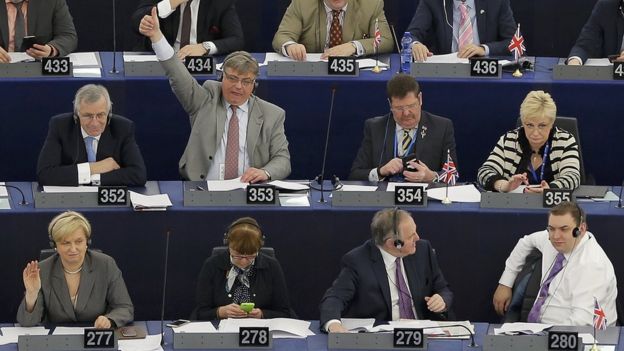
Fast-talking MEPs urged to slow down for interpreters

The European Parliament's chief of staff has urged MEPs to speak slower and stick to their native language, to help the interpreters.
MEPs in Strasbourg, 2 Feb 16
Secretary General Klaus Welle said: "It's extremely important that people do not speak too fast." Interpreters had made that request, he added.

Thousands of interpreters and translators work in EU institutions, to cope with 24 official languages.
The parliament has about 330 staff interpreters and 1,800 freelancers.
In addition, the parliament employs about 700 translators, who translate more than 100,000 pages each month.
The most recent languages to be made official were Croatian (in 2013), Irish, Bulgarian and Romanian (all in 2007).

Image copyrigInterpreters translate orally, in real time. But Mr Welle said some were overburdened and others under-employed.

"The average amount of time in the interpreter's booth is 10 hours... But we need more fairness between interpreters - the individual tally varies between six and 16 hours in the booth," Mr Welle said.
The scope of translation work in the EU was unique, he said. "Even at the UN you only have interpretation in six languages."
"It's also extremely important for interpreters that people speak their own language," he told the parliament's budgetary control committee.
"If they speak a foreign language the quality of interpretation goes down. You hear interpreters making requests to you: 'Please speak more slowly, speak your own language.'"
The parliament's budget for interpreters is €45m and another €9m for translations done externally.
The European Commission - where EU laws are drafted - has 600 staff interpreters and 3,000 freelance interpreters. The Commission's total staff is about 33,000.
________________________
http://www.bbc.com/news/world-europe-35501198

Home Office interpreters threaten boycott over pay cut

The system for processing immigration claims across the country is set to grind to a halt in the new year if a threatened mass boycott by Home Office interpreters goes ahead.
The looming action in protest at pay cuts is the first time the estimated 2,000 interpreters have threatened to stop work. The organisers of a fair pay campaign – who are running it anonymously for fear of reprisals by the Home Office – say that so far they have received solid support from several hundred interpreters. A meeting with Home Office bosses has been scheduled for 11am on Monday to discuss their concerns.
The problems began when interpreters received an email on 20 November from the Home Office central interpreters unit in Liverpool informing them that a pay cut would be introduced from 1 January. Interpreters receive £16 an hour on weekdays and slightly more at the weekend. But the first hour’s work is paid at an enhanced rate to recognise the time and cost of travelling to appointments. That first-hour rate is being cut from £48 to £32 on weekdays and from £72 to £46 at weekends.
Interpreters are expected to travel up to three hours each way without extra payments from the Home Office. They attend meetings between asylum seekers and others interacting with immigration officials, and translate interview questions and answers face to face. The pay cuts will apply to various areas of the Home Office’s work, including UK Visas and Immigration, Border Force, Immigration Enforcement and HM Passport Office.
The interpreters say they have not had a pay rise since at least 2002, so in real terms have already taken a sizeable cut. But this is the first time the Home Office has proposed lowering their wages.
Home Office interpreters are highly trained and have to go through counter-terrorism security clearance, meaning it will not be easy to substitute other interpreters at short notice if the boycott takes effect. The plan is to start the boycott on 1 January and to follow it with a series of walkouts after that.
“There is no strike planned because, as freelancers, we cannot legally do so. We may, however, choose not to accept assignments and that is what the boycott will consist of,” said one of the interpreters organising the action.
“At the moment, the Home Office needs interpreters more than we need them. They do not have any other system currently in place to substitute our services other than for telephone interpreting, which they can outsource to thebigword [an online firm]. They know that if we boycott even for a day, that will cause major disruptions to their business.”
The interpreters have written to the Home Office to express their dismay at the pay cut. “This decision came out of the blue; there had been no consultation nor any forewarning of a reduction in our fees,” the letter says. “The fees paid to us have remained unchanged since at least 2002, when the current rates came into effect, whilst being eroded by 3.5% annually due to inflation.
“In view of this, any further reductions are totally unacceptable. Instead … the Home Office should do the right thing and seriously consider increasing the rates of payment to account for the effects of inflation, just as the Home Office has done with their staff’s salaries for the last 12 years, other than three of them.”
The organisers of the campaign have complained that they were not consulted over the changes, but Home Office officials say consultation was not required before the changes were made, in line with the terms of the interpreters’ contract.
Some interpreters have expressed concern about being blacklisted by the Home Office if they raise concerns about pay cuts. But the organisers of the protest say they have received assurances from the central interpreting unit in Liverpool that raising concerns about pay will have no bearing on the number of bookings interpreters receive from the department.
Another interpreter, who also did not want to be named, said: “The Home Office cannot function without us. They will not be able to process any immigration claims if we go ahead with our boycott.”
She said the interpreters were very loyal to the Home Office but often were not treated well. In some centres they are not allowed to use the same toilets as Home Office staff, she said.
“Sometimes we are looked down on. This pay reduction is a huge insult and the time has come to protest,” she added.
A Home Office spokesperson said: “We keep our costs under constant review to ensure the contractors we use offer the best value for money for the taxpayer. As part of this, we have considered the rates at which interpreters are paid and have made some changes, which are effective from 1 January.
“This information was shared with contractors several weeks ago. We are aware some interpreters have raised concerns about this and we have met with them to discuss why the changes are necessary.”
__________________________
http://www.theguardian.com/uk-news/2015/dec/20/home-office-interpreters-threaten-boycott-over-pay-cut